º Verify and validate the drawings to meet all customer requirements.
º Ensure that the product is produced according to the drawings.
º Ensure that the assembly can be done using the drawings.
º Ensure that the performance can be achieved once assembled.
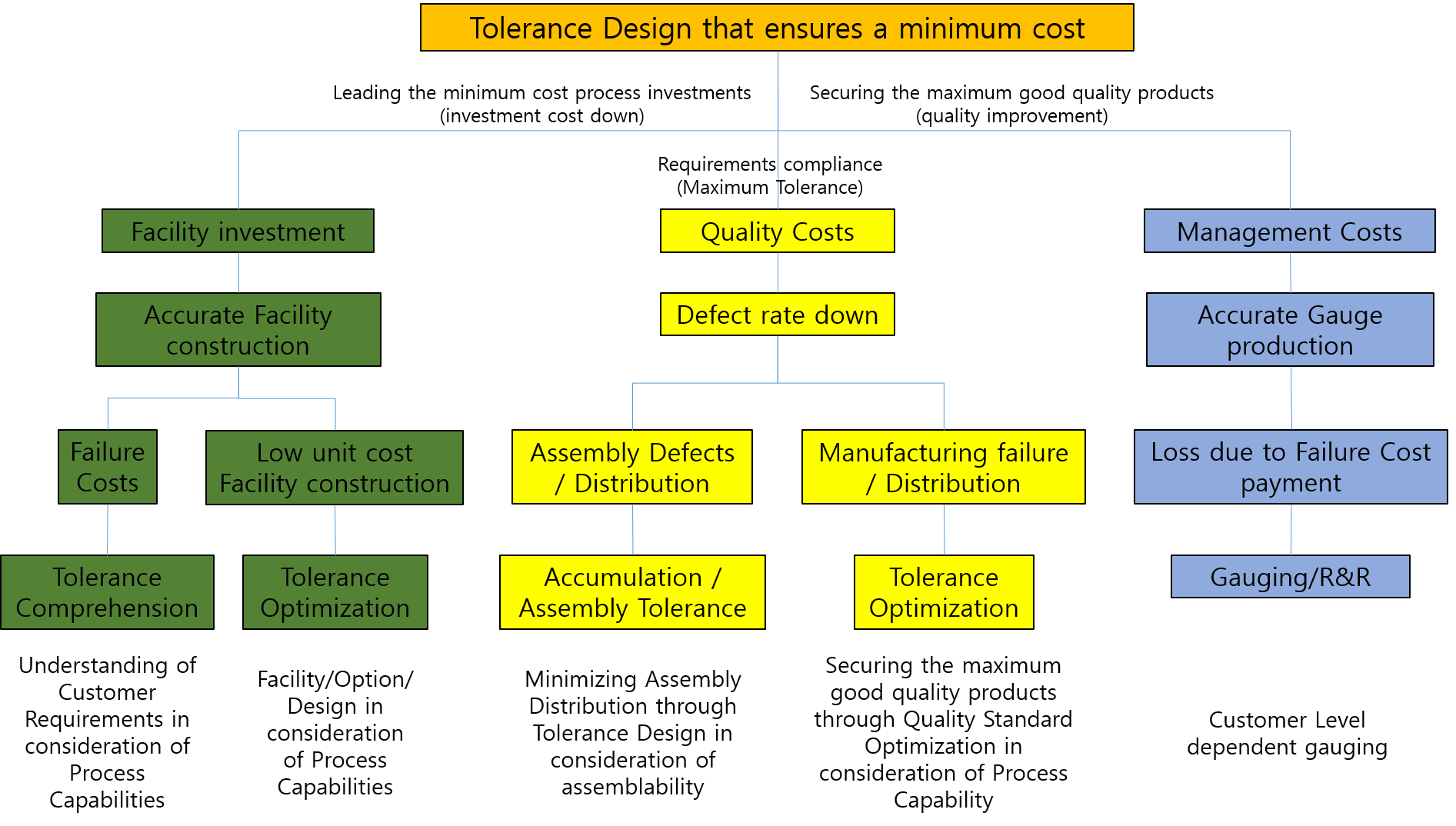
| Product Development Lifecycle and Product Development Processes |
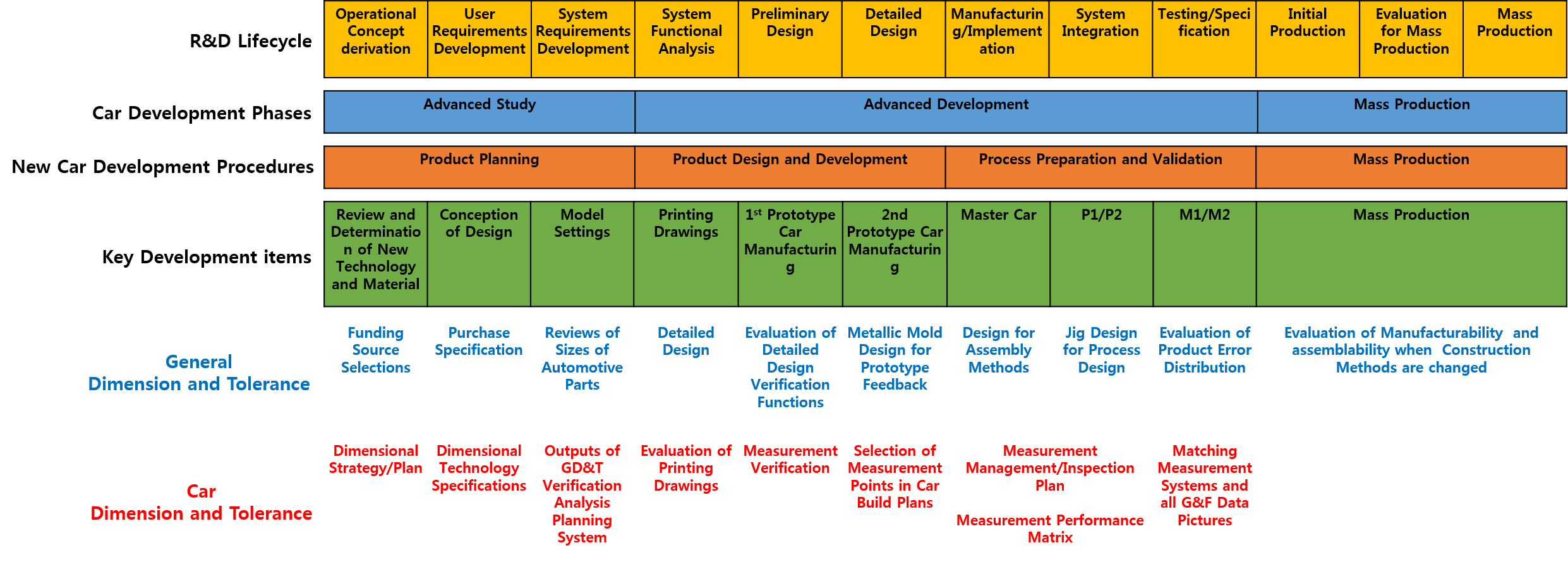

| The Dimensional Management Process |

| Tolerance and Dimension Process concept examples (GM Ref.) |
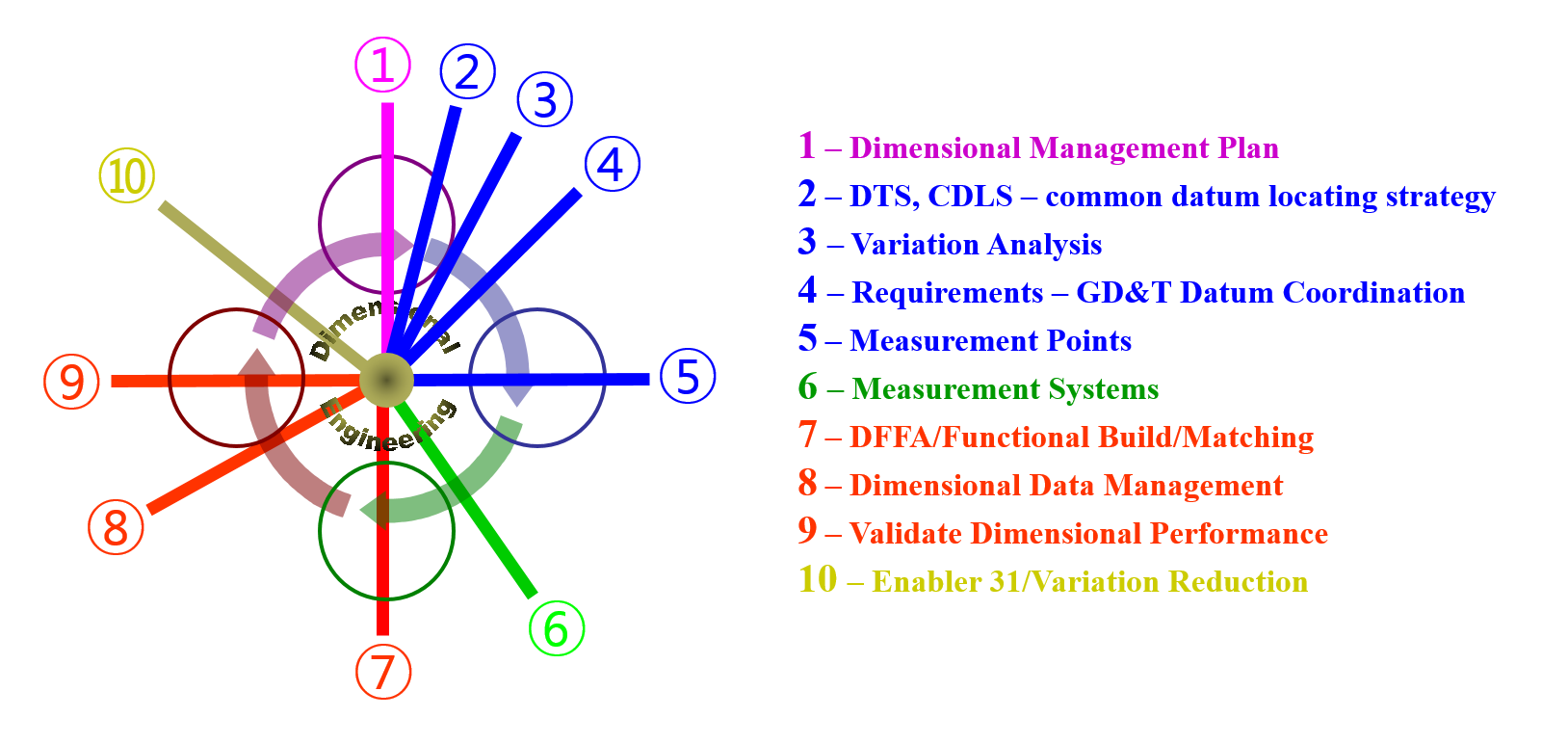
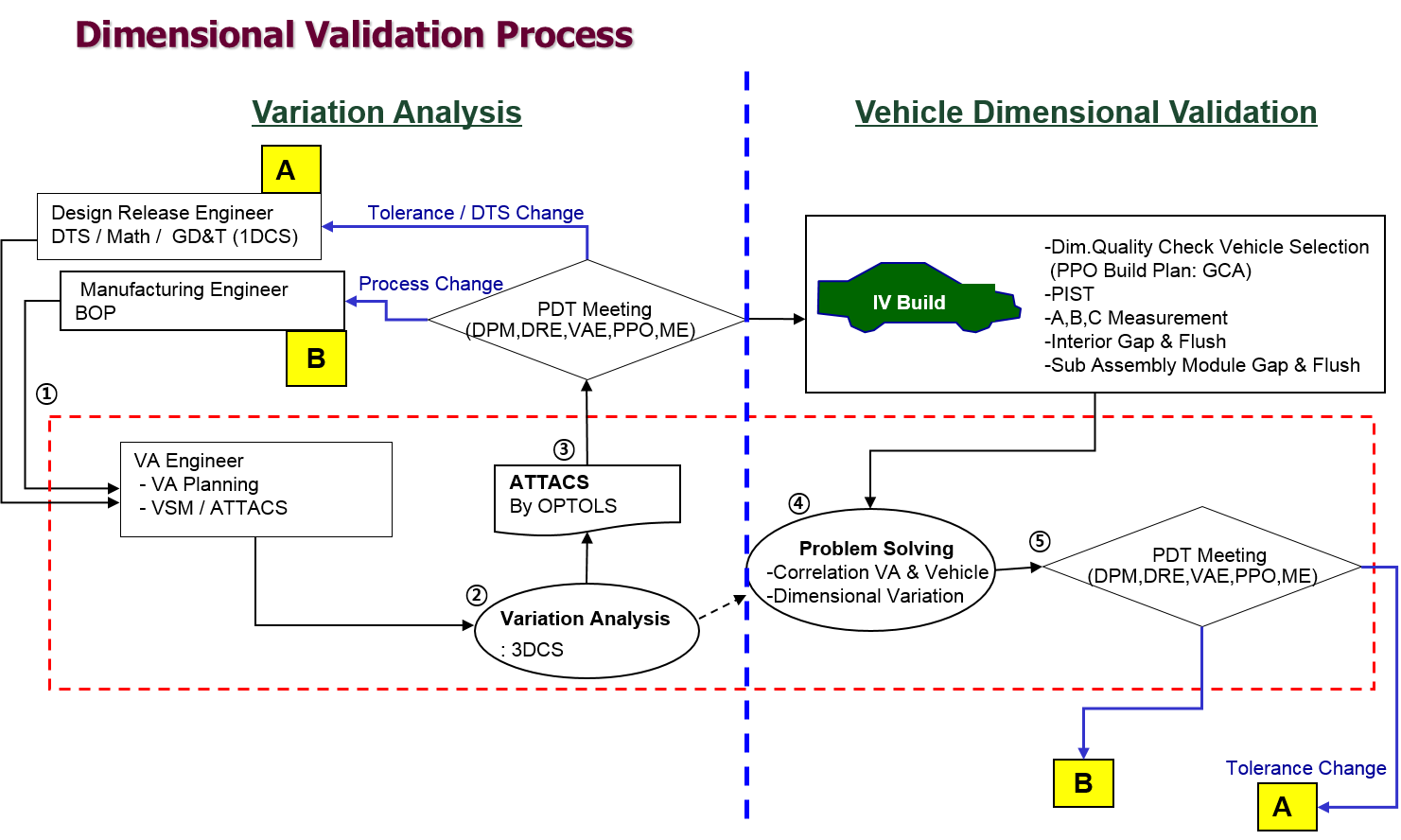
| Extended Content in addition to GD&T |
1. While GD&T (Geometric Dimensioning & Tolerancing) deal with Parts, Dimension and Tolerance address Assembly.
− GD&T course is a measure to raise your knowledge level to Assembly.
2. Dimension and Tolerance are the key part of development Processes, which are linked with Special Characteristics.
− APQP is not a Development Process but a Check Sheet to explain Purchase Conditions
3. Need to comprehend the meaning of Tolerance Bands.
− Tolerances result from reviews of manufacturing and quality with RC in addition to VC which was only addressed in GD&T.
− Add the effect of zero Tolerance for manufacturing.
− The meaning of the Tolerance Bands for material conditions imposed on datum
− How to produce the Precise Gauge Dimension
4. Enable to comprehend the Tolerance Analysis Programs.
− Understanding of mathematical basis for the Tolerance Analysis Programs
5. Need the basic knowledge to understand the drawings.
− Includes “how to read drawings” for those new-hire designers or other stakeholders.
| In addition to Educational Program |
Tolerance and Dimension should not be used for merely adding tolerances to the drawings of parts only for assemblability but be used for determining dimensional strategy among car system components, and also be used for reducing costs through obtaining Special Features in Dimensional interfaces which are required in cars and their components.
Therefore, it is required to comprehend the Product Design and Manufacturing Processes, and possess a broad view of car development processes and car system level, and distinguish between the cost and the associated expenses.
For this, the car manufacturers should train and manage their DSE (Dimensional System Engineer), allocate Special Feature Tolerances to detailed design of cars and their parts.
1. Link among the concepts of the Dimensional Requirements in the car development process
2. Give the Dimensional Special Features at the car level, and allocate them to the subsystems and below.
3. Give the permissible tolerances among the subsystems, and include them in the List of Drawing Approval
4. Design the Jigs & Fixtures for manufacturing standards and inspection criteria according to the D&T requirements of drawings
5. Provide the training to the car manufacturers and their cooperative companies on the GM C2B, VW 01055 as well as ASME Y14.5
Implement not only the usage as a design tool but also the dimensional requirements which affect the car system lifecycle.